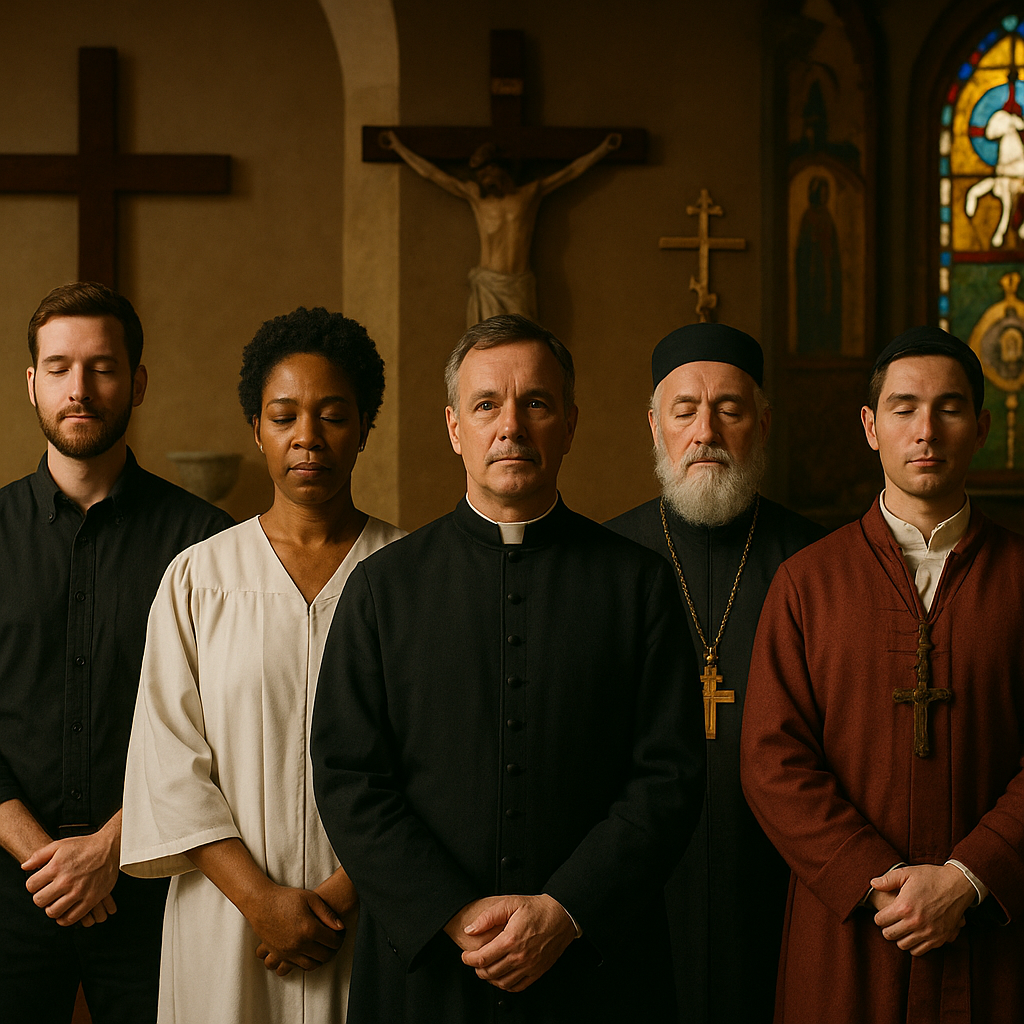
Baptism is a significant ritual within Christianity, symbolizing a believer's faith and commitment to Jesus Christ. However, the understanding and practice of baptism can vary widely among different denominations. In this article, we will explore the meanings of baptism from the perspectives of several major Christian traditions, including Baptist, Methodist, Catholic, Orthodox, Lutheran, Jehovah's Witnesses, Mormon Church, and Pentecostal.
For Baptists, baptism is seen as an outward expression of an inward faith. They believe in 'believer's baptism,' meaning that an individual should be baptized only after making a personal profession of faith in Christ. This is supported by scripture such as Acts 2:38, where Peter calls on people to repent and be baptized in the name of Jesus Christ. Baptism is performed by full immersion, symbolizing the death, burial, and resurrection of Jesus.
Methodists, on the other hand, practice both infant and believer's baptism. They believe that baptism is a means of grace and an initiation into the Christian community. In their view, as reflected in Matthew 28:19, baptism is a command from Christ and signifies a commitment to follow Him. Methodists typically use sprinkling or pouring, although immersion is also accepted.
The Catholic Church teaches that baptism is a sacrament that removes original sin and initiates the baptized into the Church. According to Catholic doctrine, as stated in John 3:5, baptism is necessary for salvation. Infants are baptized shortly after birth, emphasizing the belief in God's grace being conferred through the sacrament.
Orthodox Christians hold a similar view to Catholics regarding the sacramental nature of baptism. They practice baptism by full immersion three times, in the name of the Father, Son, and Holy Spirit, reflecting the Holy Trinity. This practice is deeply rooted in their tradition and aligns with Galatians 3:27, which states that those who are baptized into Christ have put on Christ.
Lutherans believe in baptism as a means of grace that brings about faith. They affirm infant baptism, viewing it as a way to initiate children into the faith. Lutherans reference Ephesians 4:5, which speaks of one baptism, emphasizing the unity of the Church through this sacrament.
Jehovah's Witnesses view baptism as a public declaration of one's dedication to Jehovah God. They practice baptism by full immersion, but it is only for those who have made a conscious decision to dedicate their lives to God. Their understanding is rooted in Matthew 28:19, which they interpret as a directive to make disciples and baptize them.
The Mormon Church, or The Church of Jesus Christ of Latter-day Saints, teaches that baptism is essential for salvation and must be performed by someone holding the proper priesthood authority. They practice baptism by immersion for the remission of sins, following the example of Jesus, as mentioned in Mark 16:16. They also believe in the necessity of baptism at the age of accountability, which is considered to be eight years old.
Lastly, Pentecostals emphasize the importance of baptism in the Holy Spirit, alongside water baptism. They practice believer's baptism by immersion and believe that it is an essential step in a believer's spiritual journey. They often reference Acts 2:38 to support their belief in the necessity of both water baptism and receiving the Holy Spirit.
In conclusion, while baptism is a unifying practice among Christians, the meaning and significance can vary greatly among denominations. Understanding these differences not only enriches our knowledge of the Christian faith but also highlights the diverse ways in which believers express their commitment to Christ. As we reflect on our own baptism, let us remember its profound significance and the call it places upon our lives to live out our faith daily.